
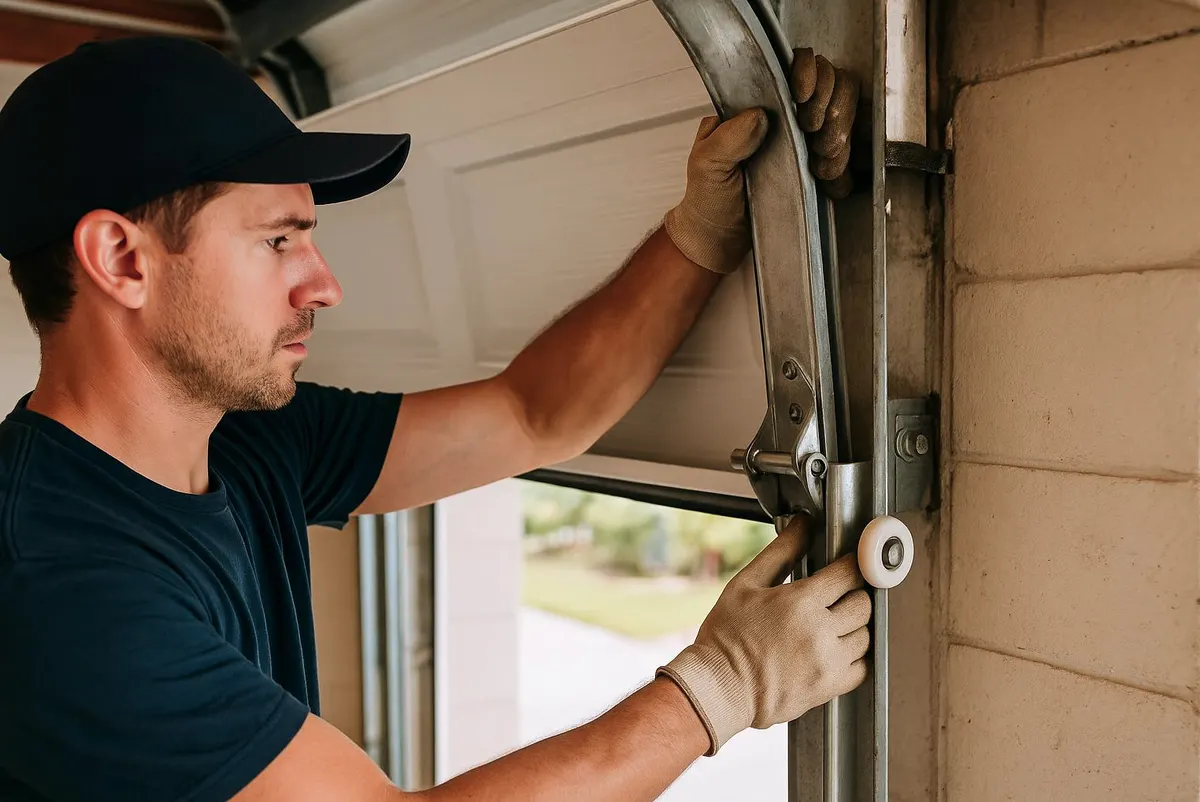
A technician gets a call because "the opener is acting weird" or "the door grinds when it closes," and when they pull up, the garage isn't really a garage anymore. There's a yoga mat where the car used to park, a space heater running off an extension cord, rigid foam board duct-taped to the inside of the door panels, and a window AC unit wedged into what used to be a vent. The door, opener, and springs are all still the originals from when the house was built, and nobody has touched them since the room got converted. That mismatch — a converted room with an unconverted door — is where most of these problems start.
Keep a Working Door, or Wall It Off? The Two Real Options
Every garage-to-room conversion eventually comes down to one decision: does the garage door stay functional, or does it get removed and framed over like a regular wall? Both are legitimate choices, but they're not interchangeable, and this is usually the actual argument happening under the surface.
Keeping the door functional means the space can still be used for parking, storage, or airflow later, and it protects resale value — buyers in this area generally expect a garage, even a converted one, to be able to go back to being a garage. Walling it off is more permanent and can make the room feel more finished, but it's harder to undo and it changes how the opening works structurally. Garage door openings are often part of a home's bracing, especially in houses that have had earthquake retrofit work done, so removing a door isn't just a cosmetic change — it affects how that wall handles lateral load. That's worth factoring in before anyone tears anything out.
What Actually Goes Wrong When the Door Gets Ignored
This is the part that causes the most frustration, because the symptoms show up slowly and get blamed on everything except the door:
- Heat buildup in summer. Inland areas see real heat for months at a time, and a standard, non-insulated steel door turns the converted room into an oven by early afternoon, no matter how good the window AC unit is.
- Cold, drafty mornings in winter. Once the rainy season sets in, gaps around the bottom seal and side weatherstripping let in cold air and moisture, which is rough on home gyms and even worse on workshop tools that rust.
- Dust and wildfire smoke infiltration. Dry-season dust and smoke find their way in through worn seals and old weatherstripping, settling on everything from workout equipment to woodworking projects.
- Condensation and musty smells. Taping foam board to the inside of an uninsulated door without any real ventilation traps moisture between the foam and the metal, which can lead to mold on the drywall side of the conversion.
- Opener strain and door imbalance. DIY insulation adds weight the original springs were never sized for, so the opener works harder, the door closes unevenly, and parts wear out faster than they should.
If You're Keeping the Door Functional
This is the lower-cost, more flexible option, and it's usually the right call if there's any chance the space goes back to parking a car someday. The fix isn't complicated, but it needs to be done in the right order:
- Install an insulation kit rated for the door's actual panel weight, not just whatever foam board is on hand — mismatched weight is what throws off the springs in the first place.
- Replace the bottom seal and side/top weatherstripping; this is the single biggest factor in keeping out dust, smoke, and winter rain.
- Have the springs and opener rebalanced after insulation goes in, since added weight changes how much lift the system needs.
- Keep the door operable even if it's mostly closed — being able to open it on hot days or during workshop dust generation does more for comfort than another window unit.
If You're Walling It Off for Good
If the decision is to permanently convert the opening into a wall, the door, track, and springs need to be fully removed — not just covered over with drywall. Garage door springs stay under serious tension whether the door is used or not, and leaving them behind inside a finished wall is a safety hazard that shows up years later when someone doesn't know it's there. Any structural bracing tied to that opening also needs to be addressed properly as part of the framing, especially in homes where retrofit work has already reinforced that wall.
When to Call Bonsall Garage Door
If a conversion has already happened and the door is struggling — slow to open, uneven, noisy, or clearly working harder than it should — that's a sign the balance is off and it's worth having it looked at before the opener burns out. Bonsall Garage Door handles Maintenance & Tune-Ups to check spring tension and weatherstripping after a DIY insulation job, and Spring Replacement when the added weight has pushed the originals past what they can safely handle. For homeowners planning the conversion from scratch, a properly insulated, weather-sealed door installed up front saves a lot of trouble later.
If your garage in Bonsall, CA has turned into a gym, office, or workshop and the door hasn't kept up, give Bonsall Garage Door a call — we'll take a look and tell you straight whether it needs a tune-up, a rebalance, or a full replacement.