
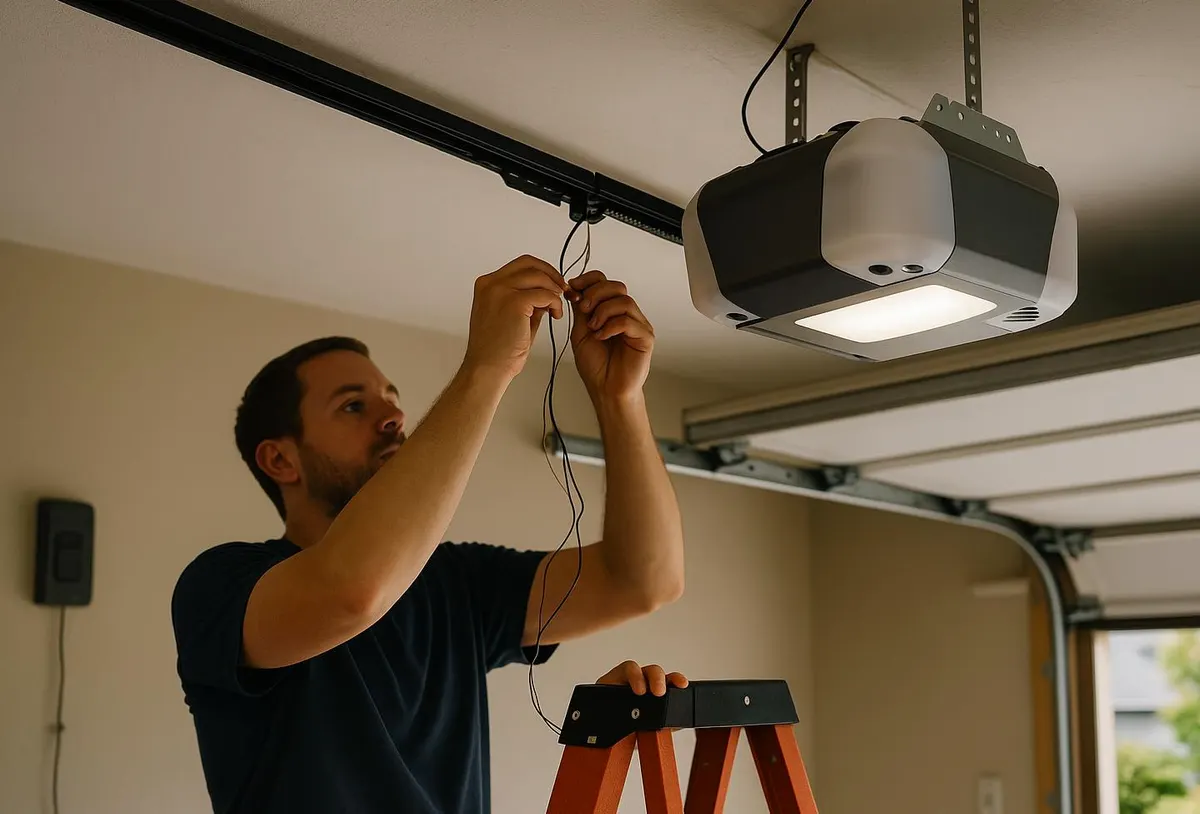
Winter Prep for Your Garage Door Before the Rain Hits
Rule of thumb: if your garage door works fine on a dry afternoon, test it again during a hard rain before you trust it for winter. The exceptions are doors that are more than ten years old, wood or wood-composite doors, and any door where you've already noticed a slow close, a sticking section, or sensors that sometimes don't line up. Those need a real inspection, not just a drive-by check.
Why Winter Is Different Here
Summer and fall around Bonsall mean dry heat, dust, and the occasional haze of wildfire smoke settling on everything, including your garage door track and rollers. Winter flips the script: steady rain, higher humidity, and water finding every gap it can. The door itself probably isn't fighting ice or snow, but it is fighting moisture intrusion, swelling wood, and debris that got baked onto the hardware all summer and now turns into grit the moment it gets wet.
Seal Up Before the Rain Starts
Start at the bottom. The rubber astragal seal along the bottom edge of the door is the first line of defense against water coming under the door during a downpour. If it's cracked, flattened, or pulling away from the track, replace it before the rain picks up, not after you've already got a puddle on the garage floor. Bottom seals are inexpensive and most homeowners can swap one out in under an hour with a basic kit.
Next, check the weatherstripping around the sides and top of the frame, called the vinyl stop. Sun exposure over a long dry season makes this brittle, and brittle vinyl cracks right when you need it most. Run your hand along it; if it feels stiff or chalky instead of flexible, it's due for replacement.
Clear Out What the Dry Season Left Behind
Dust and wildfire ash don't just sit on the door panel, they work their way into the track and roller assembly. Combined with rain, that grit turns into a gritty paste that grinds against metal every time the door opens. Before winter, wipe down the tracks with a damp cloth and apply a silicone-based lubricant to the rollers, hinges, and springs. Skip WD-40 for this; it's a solvent, not a lubricant, and it actually strips away what grease is already there. A proper garage door lubricant will hold up through a wet season better.
Test the Opener and Safety Sensors
Rain and condensation are hard on electronics, especially sensors mounted low near the ground where splashback and mud are unavoidable. Wipe the photo-eye sensors clean and make sure they're aimed directly at each other, since a knock from a stray basketball or a garden hose can shift them just enough to cause intermittent reversals. If your opener has started reversing for no clear reason, or the door won't close all the way during wet weather, that's usually a sensor alignment or a sensor lens fogging up, not a sign you need a whole new opener.
This is also a good time to check the battery backup if your opener has one. Winter storms occasionally knock out power for a few hours, and a garage door that's stuck shut (or stuck open) during a power outage is a real inconvenience, especially if it's your main entry point.
Wood and Composite Doors Need Extra Attention
If your garage door is wood or a wood-composite, winter humidity is the season that tests it most. Panels can swell slightly when they absorb moisture, which shows up as a door that drags or binds partway through its cycle, especially along the bottom corners. Check that the sealant or paint finish is intact on all exposed edges, particularly the bottom rail where water pools. A thin coat of exterior sealant now is cheaper than replacing a warped panel later.
Don't Forget the Earthquake Bracing
Many homes in this part of California have had earthquake retrofits done on the garage, since the garage often doubles as a structural weak point in the house. While you're doing winter prep, it's worth glancing at the bracing and reinforcement straps on the door itself, if your door has them, to make sure nothing has loosened or rusted. It's not a winter-specific task, but doing it alongside your seasonal check means it doesn't get forgotten for another year.
When to Call Bonsall Garage Door
If you've gone through these steps and the door still drags, reverses unexpectedly, or you hear a grinding or popping sound from the spring area, stop opening and closing it and call us instead. A spring under tension that's already showing wear from a dry summer can fail suddenly once moisture gets into it, and that's not a DIY fix. Our Maintenance & Tune-Up service covers a full inspection of springs, cables, rollers, and seals, and catches the small issues before they turn into an emergency call during the first big storm. If something's already broken, our Spring Replacement service gets it handled safely and quickly.
If your garage door needs attention before winter really sets in, give Bonsall Garage Door a call. We serve Bonsall, CA and the surrounding North County San Diego area, and we'll get your door sealed, lubricated, and ready for the wet season ahead.